When I visited the digital public square (in my case, Facebook) in the last couple of weeks, I kept seeing posts about heat index infographics and people complaining about how hot the days were turning. The heat index is the “feels-like” temperature, telling us how the combination of heat and humidity makes things hotter than the actual temperature.
In those days, I sweated a lot, even when doing nothing—just sitting by the window while trying to read. Yeah, you’re right. It was challenging to focus in that kind of heat.
How I long for my childhood days when afternoons are wonderful times to play outside.
While going through the motion despite the uncomfortable heat, I remembered an article about heat waves in Canada, which I saved in my ebook reader during the pandemic. It’s a 2021 article entitled Canada is a warning: more and more of the world will soon be too hot for humans.
What’s interesting is that reading the 2021 article as someone from the future (2024), I can’t resist the idea that this is what the author is saying when he said, “More and more of the world will soon be too hot for humans.”
From another article I saved from two years ago:
Perhaps the great awakening on warming has already happened — or keeps happening and keeps being forgotten, among other reasons so that we can continue to believe we stand just at the threshold of climate suffering rather than well beyond it. But the great awakening on adaptation probably still lies ahead of us. Or maybe that “permanent emergency” is beginning right now.
How to Live in a Climate ‘Permanent Emergency’
In 2017, the NOAA National Centers for Environmental Information data show that 2016 has become the official world’s warmest year since 1976.
And in 2024, the same dataset shows that 2023 is officially the world’s warmest year since 1976.
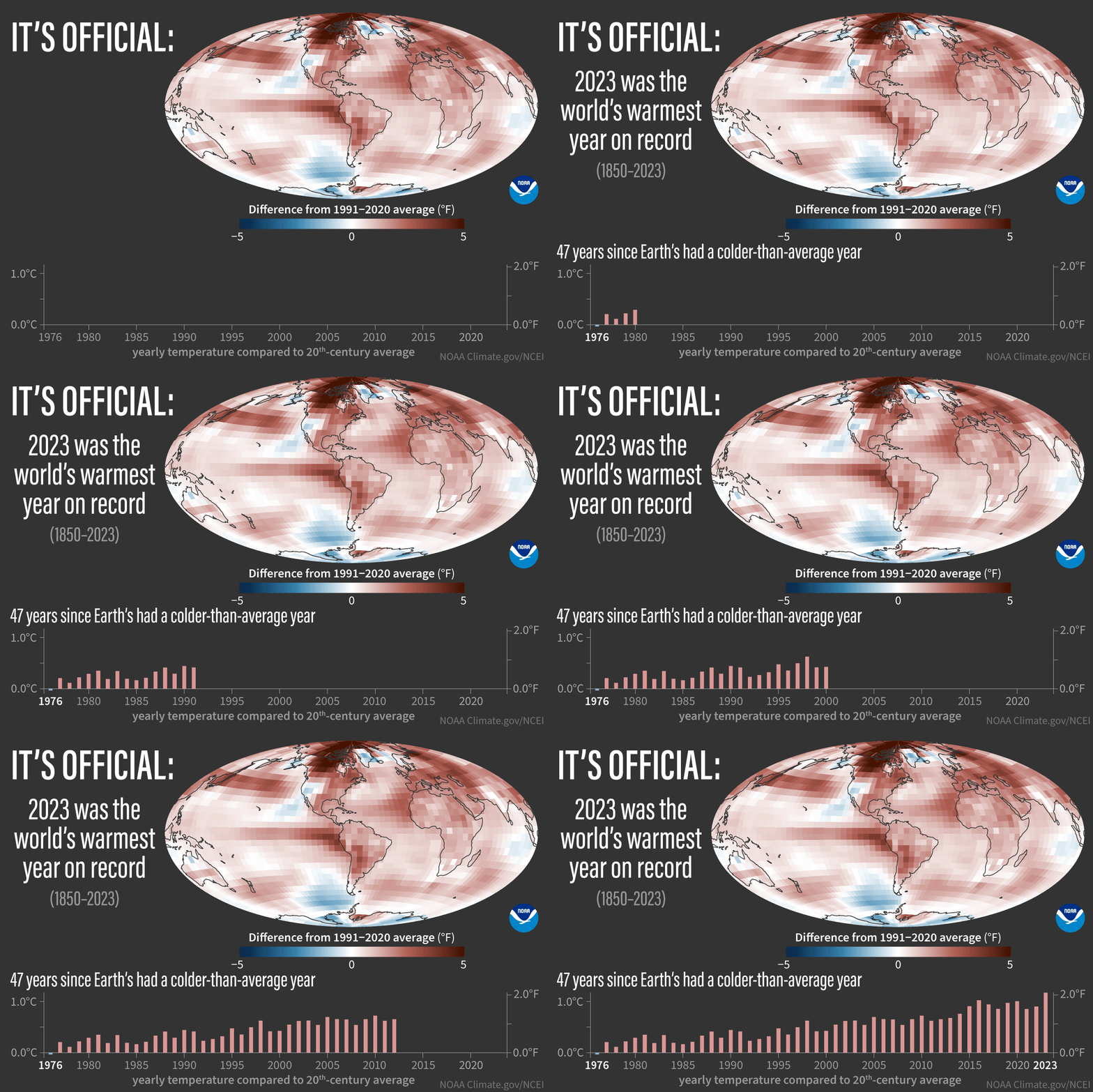
Image and text source here.
Scientists have pointed out that this global warming is caused by human-induced emissions leading to climate change. Climate change makes everyday living more unpredictable than what it used to be, causing extreme weather events like flooding, heat waves, and superstorms. The Paris Agreement aims to unite countries to limit global warming and mitigate climate change impacts, setting a 1.5-degree Celsius threshold.
So what does the 1.5-degree Celsius threshold mean?
From The 1.5C climate threshold: What it means and why it matters:
The recommendation then, was to set the 1.5 degrees Celsius limit as a “defense line” — if the world can keep below this line, it potentially could avoid the more extreme and irreversible climate effects that would occur with a 2 degrees Celsius increase, and for some places, an even smaller increase than that.
But did you know that the world has breached that mark in 2023 and for a couple of days?
From World breaches key 1.5C warming mark for record number of days:
On about a third of days in 2023, the average global temperature was at least 1.5C higher than pre-industrial levels.
Staying below that marker long-term is widely considered crucial to avoid the most damaging impacts of climate change.
But 2023 is “on track” to be the hottest year on record, and 2024 could be hotter.
And living in 2024, we can now tell our stories about how hot things are getting nowadays. It seems that there’s no stopping the most extreme and damaging impacts of climate change in our lifetime. There’s only learning how to adapt and live through it.
From Crushing climate impacts to hit sooner than feared: draft UN report:
Climate change will fundamentally reshape life on Earth in the coming decades, even if humans can tame planet-warming greenhouse gas emissions, according to a landmark draft report from the UN’s climate science advisors obtained by AFP.
Species extinction, more widespread disease, unliveable heat, ecosystem collapse, cities menaced by rising seas — these and other devastating climate impacts are accelerating and bound to become painfully obvious before a child born today turns 30.
The choices societies make now will determine whether our species thrives or simply survives as the 21st century unfolds, the Intergovernmental Panel on Climate Change (IPCC) says in a draft report seen exclusively by AFP.
But dangerous thresholds are closer than once thought, and dire consequences stemming from decades of unbridled carbon pollution are unavoidable in the short term.
 jessa
jessa 