My sister kept talking about sitsiritsit—a traditional cassava crisp—after she saw a vendor at the other side of the road while we were on our way to Malalag, a municipality in Davao del Sur, Philippines.
I’ve seen this cassava crisp back in my childhood, usually carried on the shoulders by vendors who walk under the heat of the sun, but I cannot remember eating one. It got me thinking about delicacies we might fail to preserve just because we don’t patronize them.
But after almost a month, my sister gave me a surprise visit, bringing along a pack of sitsiritsit so that I could finally try it. She said she found a vendor passing by the gas station she went to, and she never wanted to let the chance slip away as we did before. It was timely that the vendor didn’t have a change for her bill, so she ended up buying two. And then she remembered about me.
Her thoughtfulness really made my heart glad, so I wanted to preserve the moment by writing about it and sharing some photos.
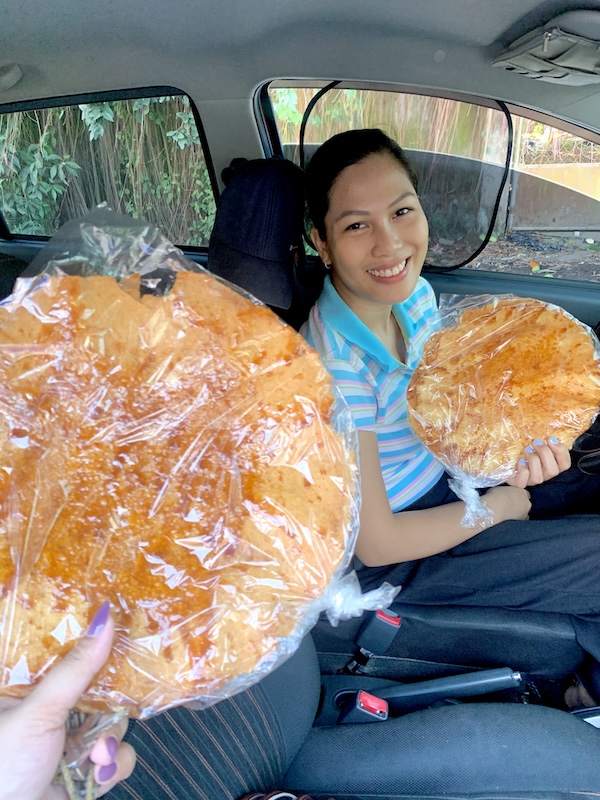
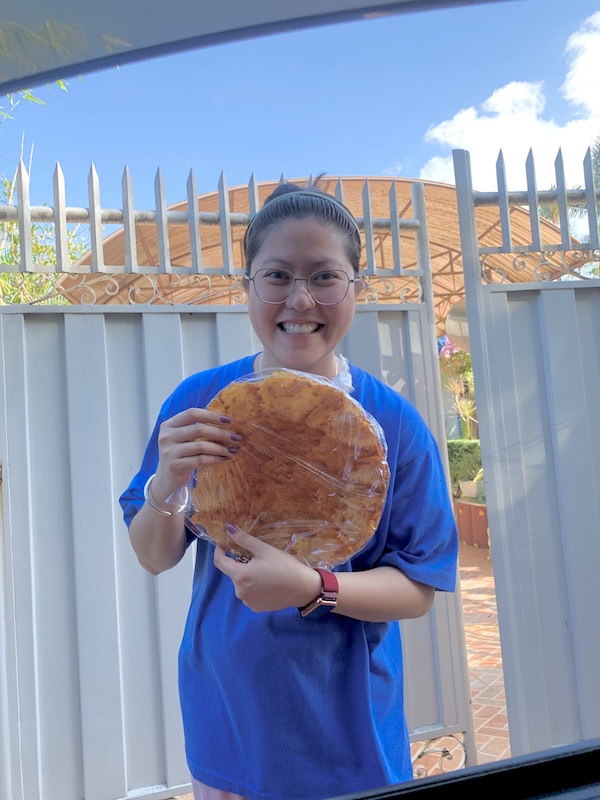
Eating it was so satisfying because it was the kind of crisp I’d been craving. It tasted like a turon minus the banana and langka filling, or like a thin sugar cone.
I did an online search about sitsiritsit but barely got any results except this blog post from 2011. When my husband told me that it’s also called salbaro, I got better search results, which eventually led me to the terms “kabkab,” “sitsaritsit,” “saritsit,” and “kiping.”
Thanks to Wikipedia’s references, I was able read a detailed description of what kabkab is and how it’s made from this 2010 blog post.
Here’s a video of how sitsiritsit/kabkab is made:
 jessa
jessa 