While reading this ecological narrative about future climate landscapes, the writing about how to desalinate water reminded me of a documentary I watched this week. The documentary is about a group of people living on an island without potable water.
I am troubled by what I have seen and wonder how much I don’t know about many things. Are we so absorbed by how our lives unravel that we forget about others who might be suffering? Have we become inconsiderate about using a finite resource, such as potable water, while others are deprived of the same access?
If, at the end of the century, the rise of sea levels disrupts our potable water sources so that we end up living like the people on that island, how would we adapt?
🌊🌊🌊🌊🌊🌊
You can download here the ecological narrative I was talking about.
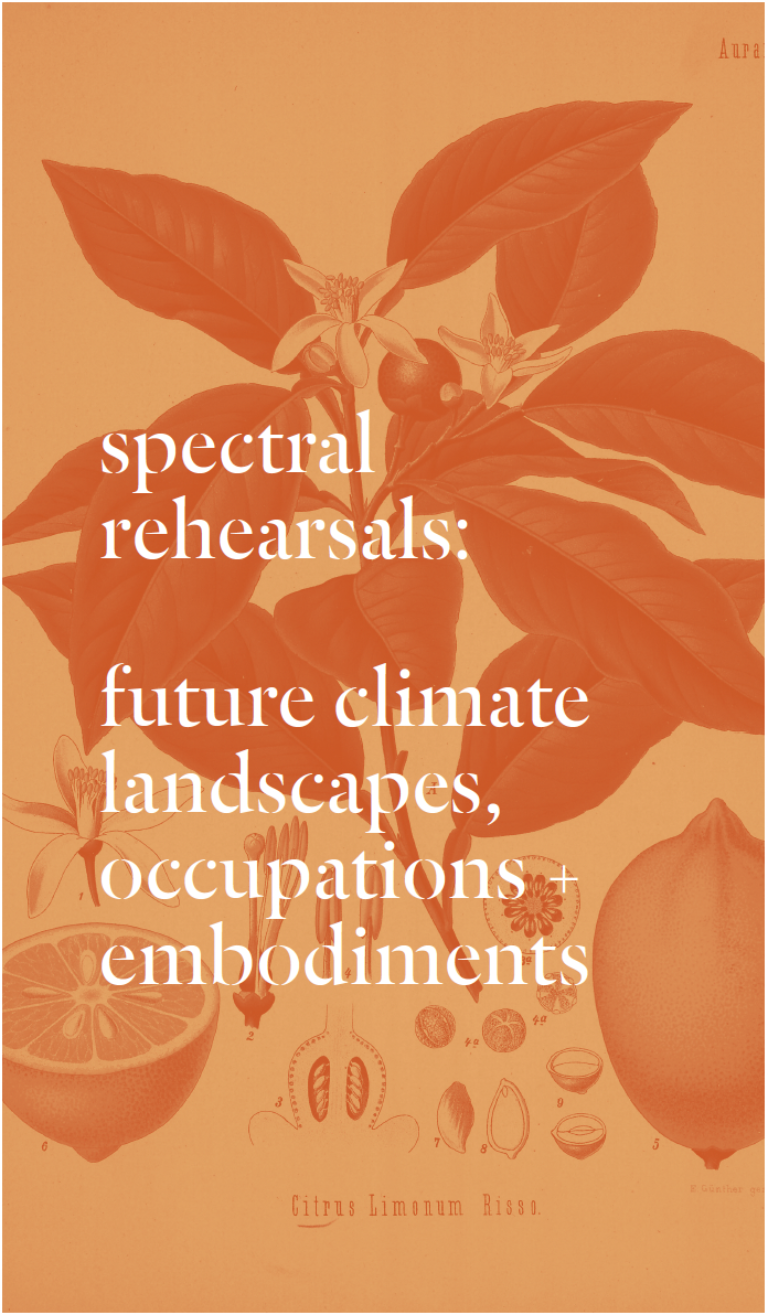
Here’s where you can watch the documentary about an island without access to potable water:
And here’s how you can desalinate water, based on the Spectral rehearsals: future climate landscapes, occupations + embodiments:
Fill a large bowl about one fourth of the way full with salty sea water. Place a heavy smaller bowl inside, submerged into the water. Cover the top of the large bowl with saran wrap and seal tightly at the edges, leaving a bit of give towards the center. Place a small, heavy rock or other object on top, at the center of the plastic.
It should be heavy enough to pull at the plastic, but not enough to cause the plastic to touch the top of the smaller inner vessel. Place the device in direct sunlight for at least five hours. The interior should become humid with time, causing the salt water to evaporate and condense on the underside of the plastic wrap. Water droplets will then slide down the saran wrap, inwards towards the heavy object, and drip into the smaller vessel, leaving you with potable water.
I had a hard time visualizing it the first time reading it, so here’s a video that helped me and you might find helpful too:
 jessa
jessa 