Video-faking algorithms are so advanced that faked videos are impossible to distinguish from real footage. These algorithms can completely replace people’s faces and speech to make it appear they’ve said or done anything the author intends. With this technology, anyone can manufacture video “proof” to back up any claim. These video fakes flood major video-sharing, social media, and live-streaming platforms.
–from Forecasting Skills: See the Future Before it Happens course by Institute for the Future
The Institute for the Future presented some guide questions to keep the conversation going. Here are my responses:
How would this world be different from today?
Some people (if not all) in this kind of world would think twice about the media they consume. Since video-fakes are commonplace, trust becomes a scarcer resource.
What would you be excited about in this future?
I am not incredibly excited about this future. Just by the idea of it being a fake only invites chaos and disorder on whatever platforms it will be used.
What would you worry about in this future?
I worry about the prevalence of manipulated media that suits harmful and destructive agendas.
Who benefits in this future?
People who have anything to hide and people who want to push specific agendas benefit in this future.
Who is at a disadvantage in this future?
People who want to keep their lives private are at a disadvantage in this future.
Do you share the same sentiments like I do? Let’s keep the conversation going! Feel free to message me here or share this post with a friend.
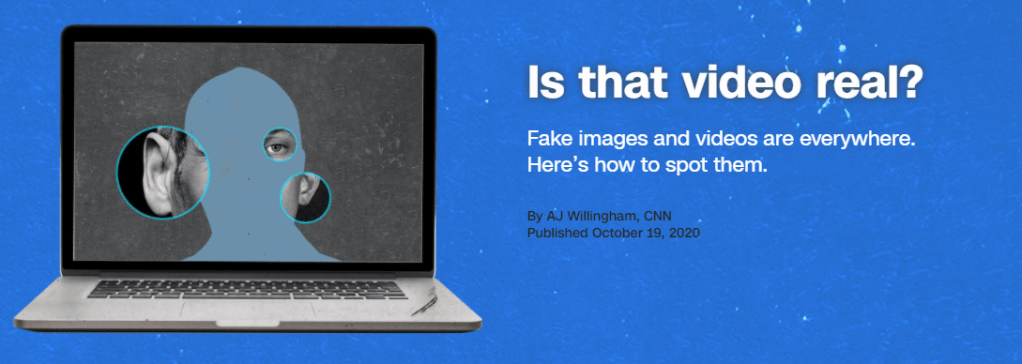
To read more about this kind of future, here’s an article on how to spot fake videos by AJ Willingham, CNN, published last October 19, 2020.
 jessa
jessa 